
Distributed work is here to stay. In some key industries, the majority of workers were remote in 2021, a sharp increase from just 15-20% in 2019. And while more businesses hoover up top talent from different countries, it's worth noting that this model isn't without its difficulties.
One of the most prominent issues being remote employees frequently experience loneliness and a sense of alienation from their coworkers and company culture. When these emotions go unresolved, deadlines, company morale, and overall productivity suffer, as research confirms that workplace loneliness is associated with lower job performance, reduced job satisfaction, and elevated burnout.
This is where people ops managers come in, but the skill set required for the job isn't what it used to be. If you used to be a master of people management but now find that the same rules don't apply because your team members work remotely, you're not alone. As a director of people operations, here are five essential qualities that you need to manage your remote team effectively.
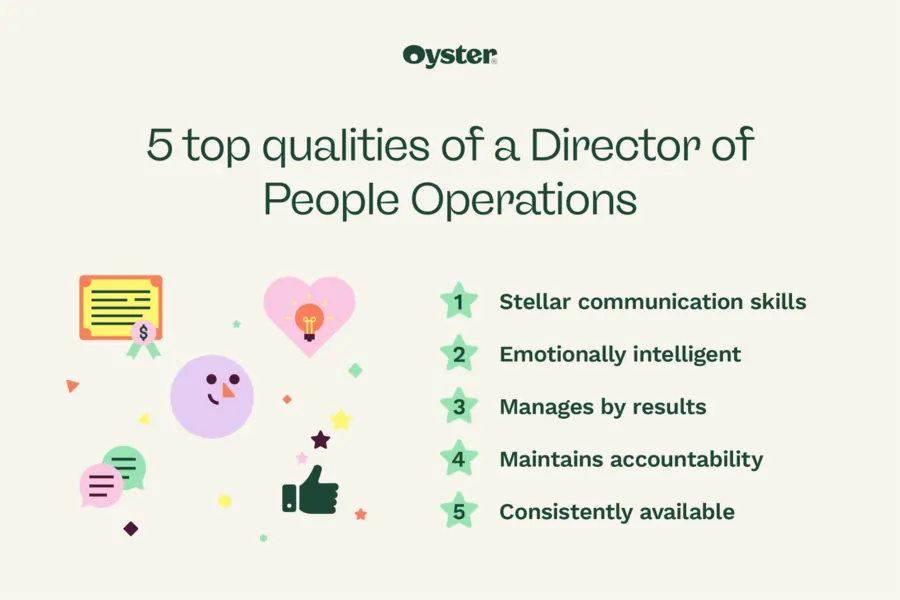
Stellar communication skills
Remote People Ops directors need exceptional communication skills because virtual environments lack visual cues and spontaneous interactions. Clear, frequent communication prevents misunderstandings and keeps distributed teams aligned.
Here's what effective remote communication looks like:
Curious about hiring across borders? Learn the basics of building a global team with our free guide to hiring global talent!
So how do you keep remote teams engaged? Create multiple communication channels beyond work topics—think wellness check-ins, celebration spaces, and feedback loops. This builds the camaraderie that makes distributed teams actually work.
Last but not least, directors of people operations must be excellent listeners to communicate effectively. Communication is a two-way street, and it's impossible to provide accurate feedback if you don't understand the other party.
Emotional intelligence
To be an excellent virtual leader, you must connect emotionally with your team members—leading with empathy and fostering trust.
When you lead with empathy, you add a human element to the virtual environment. This reduces the sense of isolation that virtual workers may feel—a critical connection, as studies show workplace loneliness is associated with psychiatric symptoms—allowing them to feel like part of a real community.
Check in with each member of your team to see how they're doing, especially since some people may struggle to adjust to remote work. Ask about their families, pastimes, or what they thought about something interesting that happened that week. Empathize with them to demonstrate a shared understanding, letting them know that you see them as people, not just employees.
Connecting with every team member gets harder as you scale. Social isolation has significant business implications; one pre-pandemic estimate found loneliness costs UK employers £2.5 billion per year—making mentoring programs for new remote hires even more essential.
You can set up a mentoring program for these employees by pairing them with more experienced team members. This is a great way to foster more personal relationships among coworkers, eventually influencing team spirit and building a sense of camaraderie.
The ability to manage by results
It's important to shift your focus from activity to results when managing a remote team, especially since the rise in remote work has been associated with a significant increase in industry-level TFP (total factor productivity).
A focus on activity can lead to team dependency and micromanagement. Instead, be clear about the outcomes and deliverables, and then step back and let them do their job. Don't tell your team how to do their job; instead, state what needs to be done and watch their creativity blossom.
Employees who work remotely prefer the flexibility to work when and how they want. Embrace flexibility, trust your team, and give them the freedom to work in the way that best fits their schedules, as long as they meet deadlines and keep the company's bottom line in mind.
The ability to maintain accountability
Remote accountability requires crystal-clear systems. Here's what that structure looks like:
Vague milestones kill remote team performance. According to a Gallup study, only 36% of U.S employees are engaged at work—clear expectations are your antidote to disengagement and turnover.
Setting goals improves productivity by making it easier to determine key performance indicators (KPIs), reward outstanding performance, and provide feedback for improvement. Giving team members regular feedback can help them improve their work and reduce the likelihood of delivering poor quality work.
Give positive feedback for what they've done well, as well as corrective feedback when they've strayed from the path. Put your emotional intelligence to use here, and be mindful of how you communicate feedback or criticism to your employees. Focusing feedback on an employee's weak points can reduce their performance by 27%.
Availability
Because it is often difficult to determine someone's availability in a remote work setting, people leaders must make it simple for remote employees to contact them. It's not like your team members can pop into your office to ask a quick question, as is possible in physical workplaces.
It is your responsibility as a people manager to replicate that level of availability on your remote communication channels as much as possible. You can do this by:
Whatever the medium, a virtual team manager must be proactive in staying in touch with the entire team and staying up to date on what they're working on, how projects are progressing, what obstacles they're encountering, and what they need. Your employees will feel valued if you make yourself available to them.
Your company is as good as your people
The most important part of building a lasting, profitable business is assembling and managing a team that embodies your company culture and propels you forward.
The best people operations managers MUST have all five qualities we've discussed because they're all complementary. You must be emotionally intelligent to communicate effectively, just as you must also be able to maintain accountability to track results and measure the progress of the team towards the company's goals.
Grow and take care of your global team from a single platform with Oyster. Contact us today to get started!

About Oyster
Oyster is a global employment platform designed to enable visionary HR leaders to find, hire, pay, manage, develop and take care of a thriving global workforce. It lets growing companies give valued international team members the experience they deserve, without the usual headaches and expense.
Oyster enables hiring anywhere in the world with reliable, compliant payroll, and great local benefits and perks.