What is work from anywhere (WFA)?

Work from anywhere (WFA)
Work from anywhere (WFA) is a remote work policy that lets employees work from any location globally. Unlike traditional remote work, WFA policies give workers complete location independence while employers handle complex compliance and payroll across borders—a crucial model as 35.5 million people teleworked in the first quarter of 2024 alone. This guide covers the key differences, benefits, implementation steps, and challenges of WFA policies.
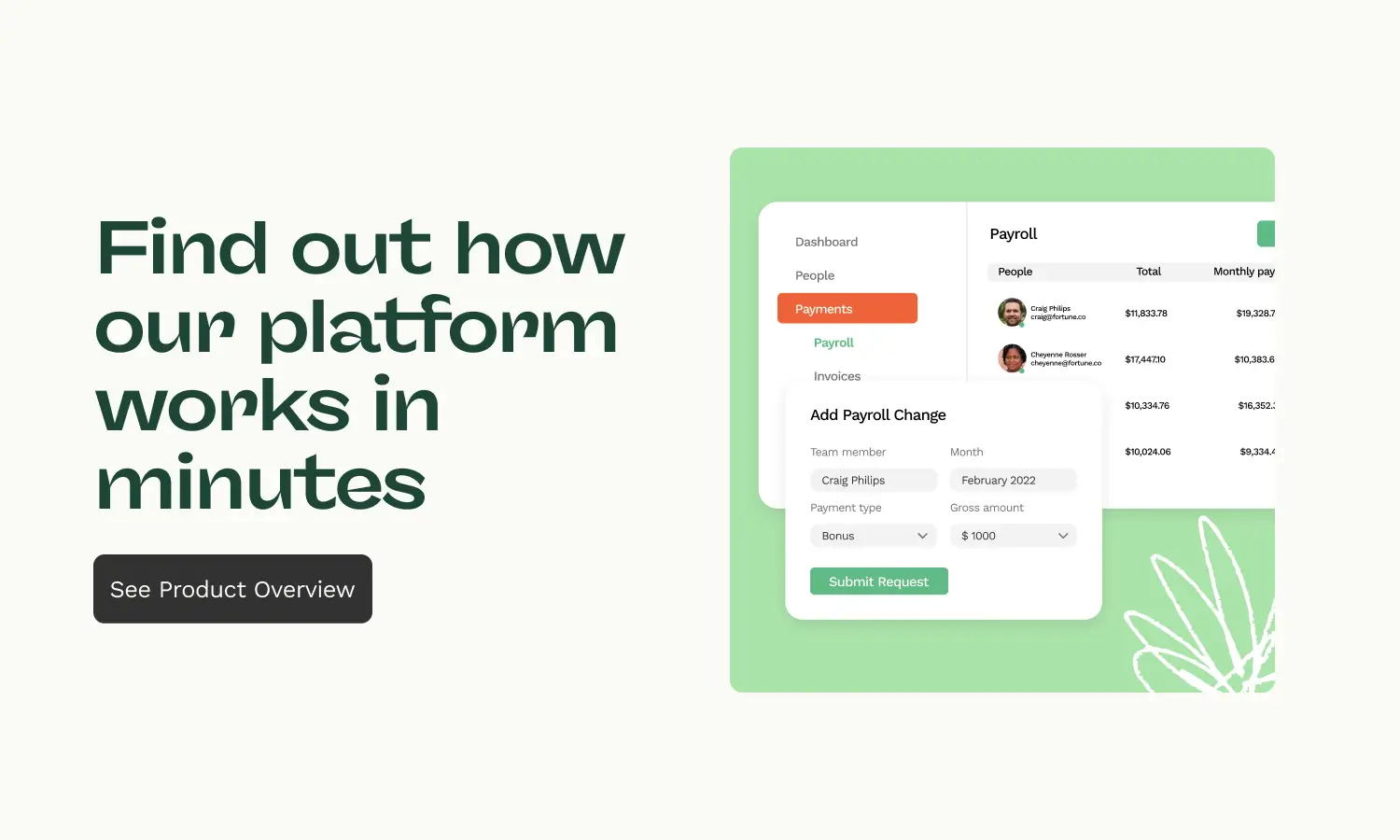
Interested in Oyster but want more information about how the platform works? This product overview should help.
What's the difference between WFA and remote work?
The key difference? Remote work typically requires employees to stay within the same country as their employer, while WFA allows true global location independence. Traditional remote work includes work from home and hybrid work arrangements, often with geographic restrictions to avoid tax and legal complications.
WFA is on the more flexible end of the spectrum where companies give workers the freedom to choose where they work from and use global employment platforms, like Oyster, to navigate the complexities of having team members in foreign countries.
Benefits of work from anywhere policies
So, what are the actual benefits of implementing a WFA policy? Here are the key advantages that make companies competitive:
- Global talent access: Hire the best person for the role, regardless of their location, which is critical given a McKinsey survey found 87% of executives feel their companies are unprepared to address the skill gap.
- Enhanced diversity: Build teams with varied perspectives and cultural backgrounds, expanding opportunities to global talent pools and potentially increasing access for groups who are currently less likely to telework.
- Higher retention: Offer unmatched flexibility that today's workers value, as a portion of the workforce says they will leave if required to come in more.
- Cost savings: Reduce overhead by minimizing physical office requirements
- Operational efficiency: Empower teams with the autonomy they need to thrive
How to implement a successful WFA policy
Ready to implement WFA? Here's your step-by-step roadmap:
- Create clear policies: Define communication expectations, working hours, and performance metrics
- Enable cross-timezone collaboration: Establish guidelines for effective teamwork across time zones
- Invest in the right technology: Secure communication platforms, project management tools, and company resource access
- Ensure compliance: Set up compliant hiring and payroll processes for each country where you hire
- Global Employment Cost Calculator
Challenges of WFA and how to address them
While WFA offers many benefits, it also presents unique challenges. Maintaining a strong company culture without a central office requires deliberate effort, especially since only 30% of leaders strongly believe their organization is building high levels of trust between workers and supervisors. Regular virtual team-building activities and clear communication channels can help foster a sense of connection.
Navigating international labor laws, taxes, and benefits is another significant hurdle. Partnering with a global employment platform can simplify this complexity, ensuring you remain compliant in every country while providing equitable and competitive compensation packages for your team.
Companies with work from anywhere policies
Companies like GitLab, Buffer, and Spotify have successfully implemented WFA policies across industries. These organizations attract top talent by offering true location independence, proving that distributed teams can be highly productive—a trend supported by a survey where 57% of organizations reported a short-term productivity boost with remote work.
Their success demonstrates that with clear policies and the right infrastructure, businesses can operate globally while maintaining strong team engagement and performance.
Enable global work from anywhere with Oyster
Implementing a true work from anywhere policy can feel complex, but it doesn't have to be. Oyster's global employment platform simplifies the entire process. We help you hire, pay, and care for your team in over 180 countries, ensuring full compliance with local laws and regulations.
From generating compliant contracts to managing payroll and benefits, Oyster provides the infrastructure you need to build a thriving distributed team. Ready to unlock a world of talent? Start hiring globally.
FAQ’s
Can employees really “work from anywhere,” or do you need guardrails?
You can absolutely offer work from anywhere, but “anywhere” needs definition if you want to stay out of trouble. The practical approach is to set approved-location rules (for example, which countries are allowed, how long someone can work there, and what notice they must give before moving) because location changes can trigger new payroll withholding, employment law obligations, and right-to-work checks. The biggest WFA mistakes I see are treating a country move like a travel plan and waiting until after the fact to figure out taxes, benefits, and contract requirements.
What’s the biggest compliance risk with a work from anywhere policy?
The biggest risk is accidental “country sprawl,” where employees relocate faster than your company can adjust employment terms, payroll registrations, and statutory benefits. That’s when you start seeing issues like incorrect tax withholding, misaligned leave entitlements, and employment agreements that don’t match local requirements. If you’re employing people (not contracting), the safest posture is to treat every location change as a formal HR and payroll event, not an informal manager approval.
If someone moves countries mid-employment, do we need a new contract or a new employer?
Often, yes. A cross-border move can require a new set of local employment terms—things like notice periods, mandatory benefits, leave policies, and sometimes even the employing entity. In an Employer of Record (EOR) model, the “legal employer” is country-specific, so a move can mean ending employment in Country A and starting a new employment relationship in Country B, with compliant documentation on both sides. Even when you try to keep the job and compensation consistent, local rules can force changes in how you structure pay, benefits, and protections.
How do payroll taxes work if an employee works from another country temporarily?
Temporary doesn’t always mean “no impact.” The moment an employee performs work in a new country, you can create payroll withholding obligations, reporting requirements, or permanent establishment concerns, depending on duration and role. This is why many WFA programs set time limits and require pre-approval—so you can evaluate whether payroll needs to change, whether the employee has the right to work there, and whether benefits coverage still applies. If you don’t have the local infrastructure, you typically need local experts or an employment partner to keep filings and deductions accurate.
How do you avoid contractor misclassification in a work from anywhere model?
Start by being honest about the role, not the convenience. If you’re setting working hours, managing how the work gets done, and expecting an ongoing relationship, that’s employee-like in many countries, even if the person prefers “contractor” for flexibility. Misclassification risk gets worse in WFA because the rules change by country, and enforcement can be aggressive when taxes or benefits are involved. A safer pattern is to assess the role and the relationship first, then choose the engagement model, and revisit the classification when scope, time commitment, or tenure changes.
.webp)
About Oyster
Oyster is a global employment platform designed to enable visionary HR leaders to find, hire, pay, manage, develop, and take care of a thriving distributed workforce. Oyster lets growing companies give valued international team members the experience they deserve, without the usual headaches and expense.
Oyster enables hiring anywhere in the world—with reliable, compliant payroll, and great local benefits and perks.

Related Resources
.webp)
Moving to Switzerland: All you need to know
A guide to moving to Switzerland for work and life.

7 things to include in a remote work policy
Things to consider when creating a remote work policy doc.

Can you work from anywhere with a remote job?
Things to consider when working remotely.

10 takeaways from the Facebook remote working town hall
Learn from Facebook's new remote working policies

How to complete new employee onboarding forms
Ensure employees complete all necessary onboarding work.
