

If you've never been through an Employer of Record (EOR) migration before, it's easy to assume it's a complicated, months-long project full of uncertainty. We hear that all the time.
People imagine endless paperwork, confused employees, payroll disruptions, and a project that consumes their HR team for months. The reality is much more structured.
One thing we've learned after guiding organizations through EOR migrations at Oyster is that uncertainty — not complexity — is what creates the most anxiety. Once companies understand what the process actually looks like, the migration becomes much easier to plan for.
Every migration is different, but they all follow the same general framework. Here's what that looks like at Oyster, what happens during each phase, and why we've designed the process this way.
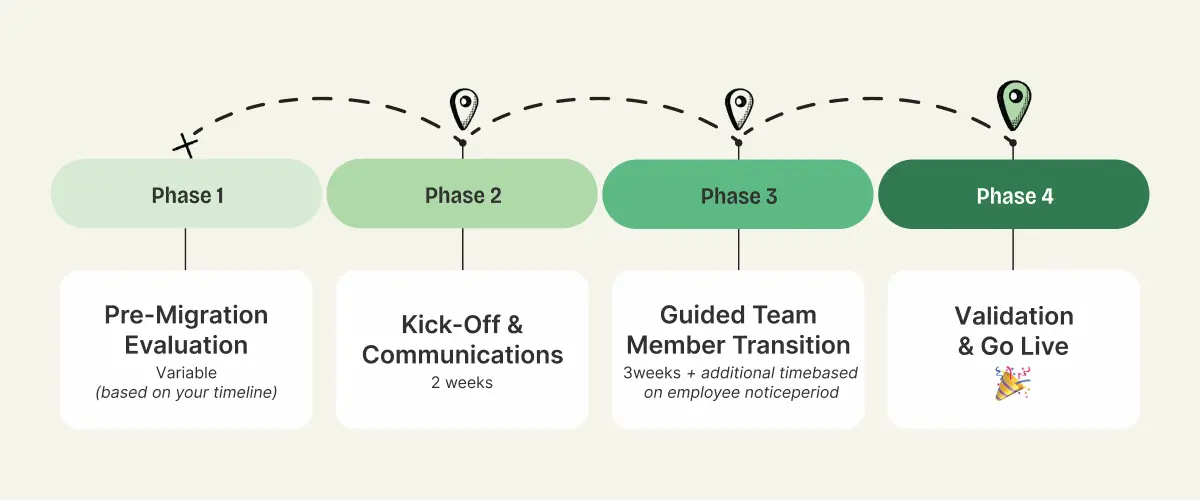
Phase 1: Pre-Migration Evaluation
Before anyone signs a contract, we believe you should understand exactly what you're committing to. That's why every Oyster migration starts with a planning phase — not paperwork.
Together, we review your current setup, including your team members, countries, employee benefits, notice periods, and any unique employment situations. From there, our migration specialists build a preliminary project plan, identify country-specific considerations, compare your existing benefits with Oyster's offering, and prepare an estimated employer cost breakdown.
One thing that often surprises companies is that all of this happens before they commit to switching. We don't believe organizations should have to make a decision without understanding the timeline, costs, potential risks, and employee impact first.
Why this phase matters
Most migration anxiety comes from unanswered questions. How long will this take? How much will it cost? What happens to our employees?
By answering those questions upfront, companies can decide whether migration is the right choice for their business — not simply take a leap of faith.
Phase 2: Kick-Off & Communications
Once you've decided to move forward, the focus shifts from planning to execution. At Oyster, every migration begins with a kickoff session where we introduce your migration team, review the project plan together, and align on responsibilities and timelines. From there, your organization notifies your current provider and begins coordinating the commercial offboarding process, while your employees are informed about the upcoming transition.
One thing we've learned is that communication is just as important as compliance. Employees naturally have questions when their legal employer is changing. The more clearly the process is explained, the more confident they feel throughout the transition.
How Oyster helps
We provide communication templates, guidance on how to announce the migration, and live Q&A sessions where employees can ask questions directly to our team. Our goal is to make sure both your HR team and your employees know exactly what to expect before the transition begins.
What this means for you
A successful migration isn't just about moving employment contracts. It's about helping people feel informed and supported throughout the process.
Phase 3: Guided Team Member Transition
If there's one phase that makes HR teams nervous, it's this one. This is where employees formally resign from their current Employer of Record and sign a new employment agreement with Oyster. On paper, that sounds like the most complicated part of the migration. In practice, it's usually the most carefully managed.
Rather than asking employees to figure things out on their own, every team member is supported by a dedicated Onboarding Success Manager who guides them through documentation, onboarding, and employment agreements step by step. Meanwhile, our migration specialists coordinate payroll, benefits, employment contracts, and country-specific compliance requirements behind the scenes.
Another detail many organizations don't expect is that large migrations don't necessarily happen all at once. Depending on your workforce and countries involved, we'll often recommend transitioning employees in batches. It may extend the overall timeline slightly, but it keeps the workload manageable, reduces operational bottlenecks, and creates a smoother experience for everyone involved.
How Oyster helps
Our migration team coordinates every moving piece — from localized employment agreements and payroll setup to employee onboarding and documentation collection — so your HR team isn't managing dozens of separate workstreams at once.
What this means for you
Migration shouldn't feel like your HR team suddenly has a second full-time job.
A good migration partner takes ownership of the operational work so your team can focus on communicating, reviewing, and making key decisions.
What this looked like for Grover
This is where having experienced people can make all the difference.
Grover, a European technology subscription company, migrated more than 35 employees across six countries from multiple EOR providers to Oyster.
As Hien Teuchert, People & Culture Operations Manager, explained:
"Throughout the project, we received outstanding support not only from the onboarding manager and the migration project lead, but also from the sales executive and customer success manager. The team was always responsive, quick to answer our questions, and proactive in helping us troubleshoot any challenges along the way."
Phase 4: Validation & Go Live
Many companies think migration ends when the paperwork is complete. We see it differently. Going live is the beginning of the relationship — not the end of the project.
Once employees have transitioned successfully, we validate payroll, benefits, and employment setup before introducing your ongoing Customer Success team. From there, we continue supporting your organization through stabilization and beyond, backed by in-house HR and legal experts.
How Oyster helps
Migration specialists don't simply disappear once the project is complete. We make sure your ongoing Customer Success team has the context they need so your organization experiences a smooth handoff and continued support as your global team grows.
What this means for you
The success of a migration isn't measured by how quickly you go live.
It's measured by how confident your team feels once the transition is complete.
What this looked like for Kinsta
For Kinsta, a globally distributed hosting company, the migration wasn't just about changing providers. It was about finding a partner that could better support both their HR team and their employees.
As HR Generalist Ana Sekulic shared:
"We were using different EORs before Oyster, but we were not happy with them. The communication wasn't good, things didn't go as planned, and there were problems with edge cases. What makes Oyster stand out from other EORs we have worked with is that they really listen to their clients to understand our needs and find a tailored solution."
A process is only as good as the people behind it
Every EOR provider can show you a migration timeline. What makes the difference isn't having four phases on a slide.
It's having experienced people who know how to navigate the country-specific complexities that inevitably come up during a migration — and who can guide both your HR team and your employees through them.
That's why we believe the success of a migration isn't measured by how quickly you go live. It's measured by how confident your team feels throughout the journey — and how well positioned you are once it's complete.
Choosing your next EOR
Deciding to switch providers is only half the decision. The migration itself is temporary. The relationship with your next EOR is what will shape your day-to-day experience for years to come.
One thing we've learned after helping organizations migrate is that companies aren't simply looking for a better platform. They're looking for a partner they can trust when payroll needs fixing, employment laws change, they're expanding into a new country, or an employee needs support.
As you evaluate potential providers, look beyond features and pricing. Consider questions like:
- Will you have access to real people with local employment expertise?
- Will they help you understand the migration before you commit?
- Are costs transparent?
- How will they support your employees during the transition?
- What happens after the migration is complete?
At Oyster, that's exactly how we've designed our migration experience. Every customer works with dedicated migration specialists who help plan the transition, identify potential risks early, and support both HR teams and employees throughout the process. And once your migration is complete, that partnership continues with ongoing Customer Success and access to global employment experts.
Ready to see the full picture?
This article provides an overview of what a typical migration looks like.
Our Employer of Record Migration Guide explores each phase in much greater detail, including planning considerations, timelines, common challenges, and practical guidance for HR teams preparing to make the switch. It's built from the experience of helping organizations like Grover and Kinsta successfully migrate their global workforce.
Download the Employer of Record Migration Guide →
Have questions about your own migration?
Every migration is different. If you'd like to talk through what a transition would look like for your specific team, our experts are happy to walk you through your options, answer your questions, and explain what to expect, no commitment required.