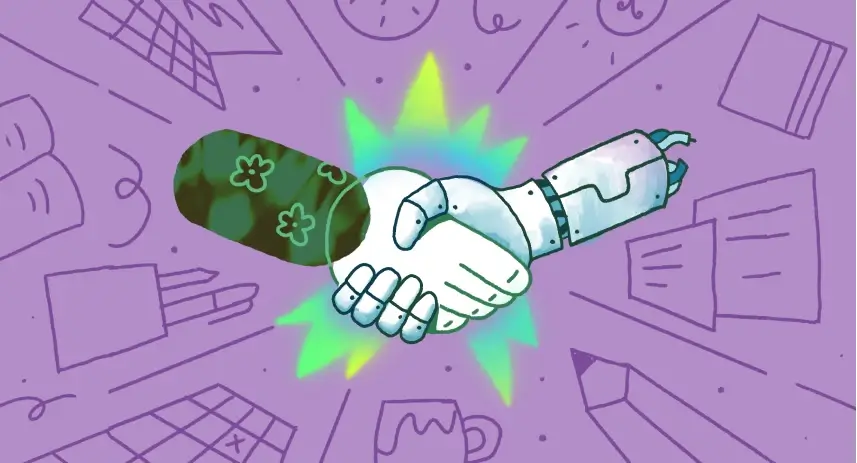
AI in HR: How will artificial intelligence impact the role of People teams?

Current trends and insights on adopting AI in People teams.

HR professional working on their laptop

Artificial intelligence (AI) is no longer just a distant possibility. It's here, reshaping industries and raising big questions for People teams. In the human resources (HR) space, AI is already showing its value in areas like recruitment, employee engagement, and workforce analytics—but it's not without its challenges. Concerns about data privacy, bias, and job displacement have left many People teams cautious about welcoming AI with open arms.

Surveys show that many HR leaders feel at a crossroads. Roughly a third of HR leaders are piloting, planning implementation, or already using generative AI (up from the previous year), and 76% of HR leaders believe that if their organization does not adopt and implement AI solutions in the next year or two, they'll be lagging in organizational success compared to those that do.

The appetite seems to be there, but what's holding HR teams back today? To help you navigate the impact AI technology may have on your People team, we're weighing the pros and the cons and what steps you can take to better understand its place in your team's future.

Stay on the cutting edge of people technology. Sign up for our free AI in HR email series

What Is AI in HR?

AI in HR refers to smart technology that automates repetitive tasks like resume screening, data analysis, and employee communications. These tools help People teams work more efficiently by handling routine processes and providing data-driven insights.

Here's what AI actually does in HR:

  • Automates workflows: Sorts resumes, schedules interviews, and processes payroll data
  • Analyzes patterns: Identifies trends in employee engagement and turnover
  • Generates content: Creates job descriptions and employee communications

It's less about replacing HR professionals and more about freeing them up to focus on strategic work that requires human judgment.

The AI Opportunity

So, what's the big draw for AI in HR? It comes down to automation and rapid data analysis that transforms how People teams operate.

The core benefits include:

  • Time savings: Automate repetitive tasks like data entry and resume screening
  • Faster insights: Analyze workforce data in minutes instead of hours
  • Strategic focus: Free up resources for big-picture planning and employee experience

So, what types of AI are HR leaders exploring to unlock this opportunity? What use cases can it help solve today?

  • Generative AI: GenAI, like OpenAI's ChatGPT or Jasper, can be used for speeding up tasks like creating job descriptions, summarizing resumes, and generating employee communications. These tools save time and improve consistency, especially for repetitive or text-heavy tasks.
  • Machine learning (ML): Learning and development tools often use ML to provide custom learning paths for their users. Based on employee data (like skills assessments and career goals) and behaviors (like promotions or performance reviews), these tools can help People teams scale and personalize their learning and development experiences.
  • Predictive analytics: Predictive analytics are just what they sound like. They can help HR leaders analyze past and present data to forecast future outcomes, like workforce trends, to support hiring plans.
  • Natural language processing (NLP): AI tools with NLP are used to understand and interpret human language at scale. HR may leverage NLP through sentiment analysis tools to gauge employee engagement from surveys.

The HR Concerns

But here's the thing—despite AI's potential, many People teams remain cautious. With so many options evolving rapidly, it's challenging to know what to pursue and how to use it securely.

What are HR teams most worried about?

  1. Data privacy: HR teams manage highly sensitive information and the stakes are high for protecting employee data. A 2024 study by Traliant surveyed 500 folks in HR roles and found that 63% of HR professionals listed data privacy and security as their top concern regarding AI, followed by compliance with data protection laws and regulations (52%).
  2. Limited resources and expertise: Adopting AI often requires technical knowledge to implement it effectively, and not all People teams have the resources to hire specialists or retrain their staff. This lack of expertise can make the technology feel out of reach for smaller organizations, a challenge magnified by the global digital divide—internet usage in high-income countries reached 93% in 2024, compared to just 27 per cent in low-income economies.
  3. Ethical risks: Bias in AI systems is a real concern. If algorithms are trained on historical data, they may replicate or even amplify inequities. For HR, this creates challenges in areas like hiring, promotions, and performance evaluations, where fairness is critical. This Workday lawsuit is a case in point.
  4. Job security: The concern is understandable: If AI can do it, why would my organization keep me around? However, now the conversation seems to have shifted. SAP predicts that employees who use generative AI will actually replace those who don't.

Should You Adopt AI?

Should your organization jump into AI? There's no universal answer. For some teams, the technology aligns perfectly with current goals and resources. For others, it may still feel premature.

Gartner recommends this three-step approach:

  • Separate reality from myth: Work with your IT and legal teams to understand what's actually possible versus outdated concerns
  • Evaluate your processes: Start with tried-and-tested use cases like GenAI for job descriptions or ML-powered learning paths
  • Score solutions: Assess based on workforce readiness, ethics, and vendor landscape

Remember that you can always pilot tools in low-risk areas before rolling out broader initiatives. Take this time to also develop some guidelines for your team.

Strategic Implications for People Teams

Here's what most people miss about AI in HR—it's not just about doing old tasks faster. It's fundamentally changing what the People function looks like.

Think about it this way:

  • Less administrative work: AI handles routine tasks like data entry and basic reporting
  • More strategic focus: HR leaders can focus on culture, employee experience, and leadership development
  • Better business partnership: Use data-backed insights to guide talent, retention, and growth decisions

This shift elevates HR from a support function to a core driver of organizational success.

The Human Future of AI in HR

Will AI replace HR professionals? Not a chance. The future isn't technology versus people—it's technology empowering people to do their best work.

The most effective People teams will use AI to handle operational tasks so they can focus on what humans do best: building relationships, solving complex problems, and creating cultures where people thrive.

As you explore ways to build and manage your global team, having an intelligent platform that handles complexity is key. If you're ready to see how technology and human expertise can simplify your operations, start hiring globally with a partner built for the future of work.

For more insights on the future of AI in HR and People Ops, check out this episode of Oyster's New World of Work podcast with Dr. Kait Rohlfing, industrial-organizational psychologist and Senior Leadership Trainer at LifeLabs Learning. If you'd like to simplify your global HRoperations, reach out today for a personalized demo of Oyster's intelligent, automated platform.
Book an Oyster demoAbout Oyster

Oyster is a global employment platform designed to enable visionary HR leaders to find, engage, pay, manage, develop, and take care of a thriving distributed workforce. Oyster lets growing companies give valued international team members the experience they deserve, without the usual headaches and expense.

Oyster enables hiring anywhere in the world—with reliable, compliant payroll, and great local benefits and perks.

FAQ’s

How is AI used in HR without turning hiring into a “black box”?

Is it safe or legal to use AI for recruiting decisions (bias, GDPR, anti-discrimination rules)?

What is the “30% rule” in AI, and should HR teams rely on it?

Will HR jobs be affected by AI, and what skills will matter most?

Yes, HR roles will change, but “affected” doesn’t automatically mean “eliminated.” The work most exposed is high-volume, rules-based administration. The work that grows in value is judgment-heavy and trust-heavy: workforce planning, employee relations, policy design, compensation strategy, change management, and ethical governance of AI itself. The HR teams that hold their ground will get good at data literacy, process design, and vendor risk management, and they’ll be the ones who can translate AI outputs into decisions a CFO, a legal team, and employees can actually stand behind.

How do you use AI to write job descriptions and HR policies without creating legal risk or generic boilerplate?

Use AI for structure and clarity, then ground the content in your real role requirements and local obligations. The common failure mode is letting a model invent “nice-to-have” requirements that quietly discriminate, or publishing policy language that contradicts local law, your benefits reality, or how you actually manage performance. The practical fix is to feed the model your approved inputs, like leveling expectations, compensation philosophy, and a short list of truly job-related requirements, then run human review with HR and legal before anything goes live. If you operate across countries, you also need a localization step, because “standard” HR language is rarely standard once you cross borders.

Oyster Team

Oyster is a global employment platform designed to enable visionary HR leaders to find, engage, pay, manage, develop, and take care of a thriving distributed workforce.

Oyster's logo - green, oval-shaped letter O

About Oyster

Oyster is a global employment platform designed to enable visionary HR leaders to find, engage, pay, manage, develop, and take care of a thriving distributed workforce. Oyster lets growing companies give valued international team members the experience they deserve, without the usual headaches and expense.

Explore for Free

Get our best content delivered in your inbox

Whether you stumbled across an amazing developer based in Argentina, or you’ve had your eyes set on building a fully distributed team all along, Oyster makes it easy to go global your way.

Additional Resources

Discover more

Building community in the digital age with Lars Schmidt, Founder and Community Catalyst of Amplify

How to build an authentic community for People Ops leaders.

Learn more
Oyster Product Updates

Better contractor management, new benefits, and more: May product updates

See what's new this month.

Learn more

Icebreaker ideas for remote meetings

Spark conversation among your remote team with these ideas.

Learn more
Talent Acquisition

Utilizing an onboarding tracker

Discover the benefits of a well-executed onboarding process.

Learn more
Global Payroll and Benefits

Payroll compliance: 9 best practices for 2026

Managing payroll across teams and locations is complex. Learn payroll best practices to stay compliant, reduce risk, and simplify processes for smoother, stress-free operations.

Learn more

Get Started with Oyster

Whether you stumbled across an amazing developer based in Argentina, or you’ve had your eyes set on building a fully distributed team all along, Oyster makes it easy to go global your way.

Two employees holding a document together
Text Link