

Why We're Sharing This
In January 2025, I made one of the hardest decisions of my life: I approached our board about finding my replacement as CEO.
Not because something was wrong. Not because I was burned out or being pushed out. But because I believed Oyster needed something different for its next chapter—a leader closer to operations, more disciplined in execution, better suited to scale a company from strong to unstoppable.
That clarity didn't make the process easier. Founder succession is deeply personal. It's about recognizing your strengths, acknowledging your limits, and loving something enough to know when it needs a different kind of leadership.
We decided to document our process because leadership transitions are one of the most high-stakes moments in a company's life. If sharing our experience helps even one founder navigate this with more confidence and less fear, it's worth it.
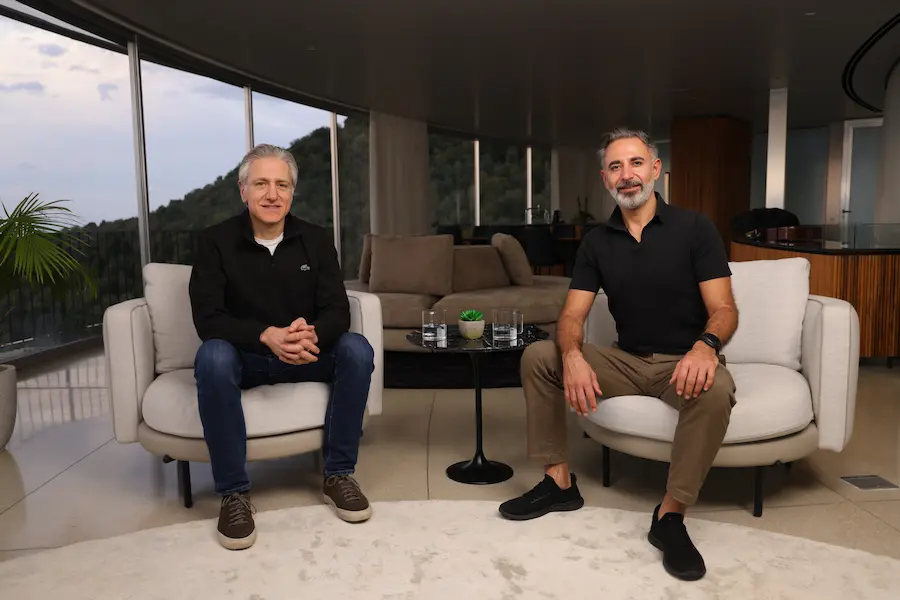
This is how we found Hadi Moussa, Oyster's new CEO.
Starting From Strength, Not Crisis
Here's what mattered most: we launched this search proactively, from a position of strength.
Oyster wasn't in crisis. We had strong financials, a talented team, and clear market momentum. But I could see what was coming—the operational complexity of scaling, the need for disciplined execution, the shift from entrepreneurial energy to institutional building.
I went to our board with a clear conviction: for Oyster to become a multibillion dollar worktech impact company by 2030, we needed a CEO who could be closer to operations, embody our mission, and give Oyster the best possible chance to succeed in this next phase. They were supportive, and we partnered on the search from day one.
The question we kept asking: What kind of CEO can take Oyster to $10 billion while keeping the mission at the center?
Because at Oyster, growth and impact aren't trade-offs: they amplify each other. We needed a leader who believed that in their bones.
Building the Search Committee
We formed a search committee of five people, including me.
Why me? Because I know Oyster's DNA better than anyone. I know what breaks our culture and what strengthens it. I know the mission in my bones. And frankly, I needed to believe in whoever we chose—this wasn't about replacing me, it was about setting Oyster up to achieve its full potential, to succeed more than anyone has ever imagined.
A note for founders: If your board is driving this and you're not involved, that's a different process. This was founder-led with board partnership, which gave us the space to be both rigorous and mission-aligned.
Step 1: The Mirror Test — 360° Feedback
Before we talked to a single candidate, we looked in the mirror.
We ran 360° feedback across the leadership team with one question at the center: What does Oyster need from its next CEO?
The answers were clarifying:
- Closer to operations and execution
- Decisive in prioritization and direction
- Strategically rigorous while pragmatic in delivery
- Accountable in setting clear standards and ownership
- Steady and calm, creating trust in all conditions
- Mission-aligned—this can't be taught
This became the foundation for everything. Not "who's the most impressive on paper," but "who does Oyster actually need right now?"
What we learned: We couldn't evaluate CEO candidates until we articulated what the role specifically needed to accomplish. The 360 forced that clarity.
Step 2: A Global Search (And What We Got Wrong)
We interviewed over 40 candidates globally, from the U.S., Europe, and beyond.
Early on, we made a mistake: we looked at too many specialists. Former CROs who could scale revenue. Former CFOs who could tighten operations. Former General Counsels who understood compliance.
But as we calibrated, we realized: Oyster didn't need another functional expert. We needed a generalist CEO who could integrate across functions, elevate the entire leadership team, and serve as a complementary force to each exec.
Not another revenue leader. Not another finance leader. A unifier and amplifier.
That realization cut our candidate pool significantly—and made the decision clearer.
Step 3: The Case Study
Once we had a shortlist, we gave every finalist a real CEO case study to work through.
The prompt:
"How would you lead Oyster to exceed board expectations and deliver transformative success over the next five years?"
We asked them to:
- Define "success beyond expectations"
- Show how they'd scale Oyster to a $10 billion company by 2030 while balancing mission and profitability
- Align and inspire the leadership team
- Design their first 90-day plan
- Differentiate Oyster against competitors
This wasn't theoretical. It was tactical. It revealed how candidates think, decide, prioritize, and lead in Oyster's actual reality.
Why this mattered: Interviews show you how someone talks. Case studies show you how someone thinks.
Step 4: The Scorecard
Every committee member scored candidates independently across five dimensions:
- Vision & Definition of Success
- Strategic Clarity & Growth Plan
- Leadership & Team Alignment
- Execution Framework & Early Impact
- Cultural & Mission Alignment
Hadi scored the highest across every category. But there was something else: he carried the mission in his bones. Like me, Hadi left Lebanon to find opportunity that wasn't available at home. He's lived the problem Oyster exists to solve. That alignment—between his lived experience and our mission—made the decision feel inevitable.
Why this mattered: Mission alignment wasn't a nice-to-have. It was the deciding factor. You can teach strategy. You can't teach why this work matters.
The Importance Of Strategic Founder Succession
Founder succession is one of the most vulnerable moments in a company's life. You're admitting you're not the answer anymore—at least not in the role you've held. You're trusting someone else with something you built from nothing. You're betting that the mission is bigger than your ego.
But here's what I also know: companies go through different stages, and each phase calls for different strengths. Having the self-awareness to recognize when your strengths might be better deployed differently—that's not weakness. That's leadership. And no one, including founders, is irreplaceable. The company's needs have to come first.
The companies that scale sustainably are the ones where founders have the humility to evolve their roles rather than hold onto them out of ego or fear.
I'm not stepping back. I'm stepping into a role—Executive Chairman—that lets me play to my strengths: mission stewardship, long-term vision, and ensuring Oyster remains the global benchmark for ethical, human-centered employment. Hadi gets to do what he's exceptional at: scale operations, execute strategy, and lead the team day-to-day.
HR Brew covered the transition as what it is: a strategic move to position Oyster for its next phase of growth amid massive shifts in AI and distributed work. This isn't a founder exit story. It's a founder evolution story.
Because this isn't about me anymore. It's about Oyster becoming what it's meant to be.
Final Thoughts
If you're a founder thinking about succession, here's what I hope you take away from my experience:
- Start before you think you need to. We launched this from a place of strength. That gave us time to be thoughtful.
- Get clear on what you actually need. The 360 feedback was the most valuable part of the process.
- Test for thinking, not just talking. The case study revealed more than any interview.
- Mission alignment isn't optional. Skills can be taught. Purpose can't.
- Communicate like everything depends on it. Because it does.
I'm incredibly proud of where Oyster is today. And I'm even more excited about where Hadi will take us tomorrow.
If this was helpful, I hope you'll share it with another founder who might need it.
Tony Jamous
Executive Chairman, Oyster
Have questions about founder succession or our search process? Connect with me on LinkedIn.
.webp)