Tactical Hiring and Strategic Workforce Design with Ashby and HackerOne

.webp)
Global hiring has shifted from a reactive, seat-filling tactic to a deliberate workforce design decision.
Leaders from Oyster, HackerOne, and Ashby examined how companies must now ask not just where they can hire, but where work should live, a distinction that shapes strategy, cost, culture, and compliance.
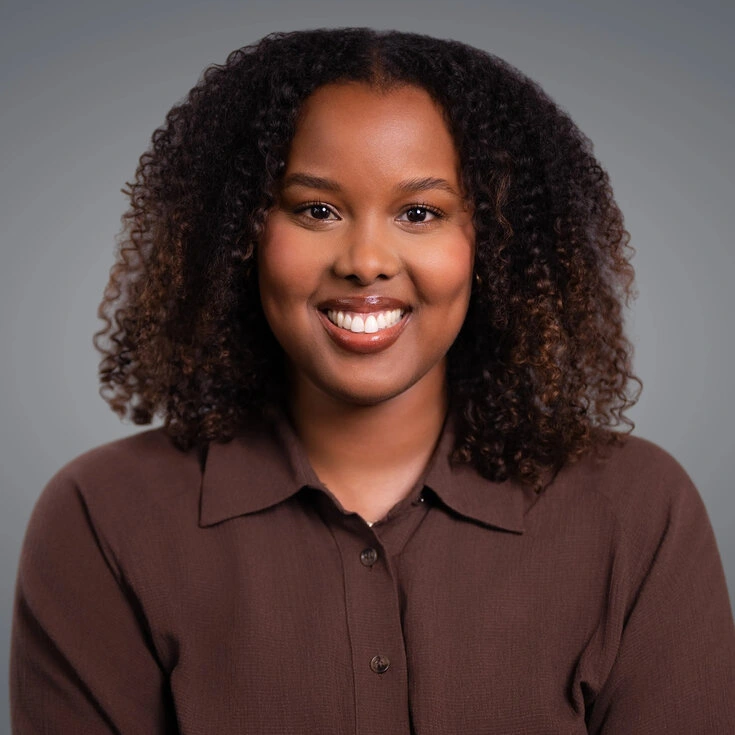
Hiba Abdillahi, brand marketing and social lead at Oyster, hosts alongside Erin Goodey, Director of People Services at Oyster; Ian Jones, Vice President of Talent Acquisition and Interim Head of People, HackerOne; and Kayla Ricketts, a community leader focused on building and growing the TA community at Ashby, a recruiting software company that helps teams manage hiring workflows and reporting. The conversation draws on Oyster's research with Everest Group, a research and advisory firm that studies workforce, outsourcing, and business operations trends.
Three interconnected themes drove the conversation: planning with data, partnering strategically, and aligning cross-functionally. Recruiting data, talent density, and total employment cost must inform location decisions before headcount is approved, not after hiring struggles emerge. HackerOne learned this the hard way when their first five AI engineer offers were all declined, proving that market access means nothing without understanding what local candidates actually want.
EORs were reframed as potential strategic partners rather than payroll processors. The panel argued that TA, HR, and finance must align earlier in the planning cycle, using shared language around cost, compliance risk, and talent availability.
Key Takeaways
Here are some of the highlights from the conversation:
- Shift the hiring question: ask where work should live, not just where it can be done, to build teams that connect and perform.
- Evaluate EOR partners on strategic value: assess whether they provide market foresight, compliance guidance, and workforce planning support, not just contract processing.
- Use recruiting data before entering a market: compare talent density, hiring speed, and total employment cost before opening a new country, not after problems surface.
- Align TA, HR, and finance early: bring total employment cost and compliance exposure to headcount conversations, not just role requests, to avoid approving roles that can't be filled or supported.
- Pressure-test every backfill: challenge whether a departing employee's role should be replaced with the same title, level, and location before automatically reposting.
Full Transcript
Hibaaq Abdillahi: Hi, everyone, and welcome. My name is Hiba Abdillahi. I am the Brand Marketing and Social Lead at Oyster, and I'm really excited to be hosting today's session with Ashby today. We are going to be talking about global hiring and how it's changed a lot over the past few years. It's no longer just about opening roles in new countries to fill gaps.
For many teams, it's become a core part of how they design their workforce, where they place talent, and how they plan to grow. What we're seeing and what we're gonna be talking about today with our amazing panelists is a shift from reactive hiring to something much more intentional. Teams are starting to ask not just where can we hire, but where we should actually live. Today's conversation is also grounded in research that we at Oyster recently released with Everest Group, Evolving Employer of Record from Tactical Enabler to Strategic Workforce Partner. Our report explores how organizations are evolving from using EOR as a quick transactional solution to treating it more as a strategic lever in their workforce planning.
One of the biggest takeaways is that global hiring decisions are becoming much more data driven. Recruiting data, talent availability, and business priorities are all starting to come together in a more intentional way. And that's exactly what we're gonna be unpacking today. We're gonna talk about how teams are using recruiting data to inform hiring decisions, what it looks like to move from transactional EOR usage to long term strategy, and how talent, HR, and finance leaders can better align when it comes to global headcount planning. Before we jump in, I'd love to introduce our amazing speakers today.
We have Erin Goodey, who's one of my favorite people at Oyster. She's the Director of People Services where she leads complex cross border employment strategies and supports high growth companies to scale compliantly and humanly. She specializes in global people operations, risk mitigation, and building pragmatic frameworks for distributed teams. Erin partners closely with founders and HR leaders to navigate international expansion, global employment, and workforce design with clarity and confidence. Thank you so much, Erin, for joining us today.
Erin Goodey: Thank you. I'm really excited.
Hibaaq Abdillahi: We also have Ian Jones from HackerOne, VPTA and Interim Head of People. Ian has over twenty five years of experience in talent acquisition and people operations. He currently leads the global people function at HackerOne, ensuring they hire and develop and support the hackeroneys, love that, responsible for making the Internet a safer place. Thank you Ian for joining us today.
Ian Jones: Thank you for having me.
Hibaaq Abdillahi: Last but certainly not least, we have Kayla. Kayla joined Ashby after being a customer, actually, drawn in by the product and deciding to focus on building and growing the TA community. She brings over fifteen years of talent acquisition from founding TA to scaling enterprise teams. Before Ashby, she led international recruitment at HackerOne and partnered closely with Ian to build and grow teams globally. Thank you, Kayla, for joining us today.
Now let's jump into the first question, and this is to all of you. So the Everest Research makes a pretty bold point. Technology alone isn't enough to solve global hiring anymore. From all of your perspectives, what's changed over, what's changed over the last few years within global hiring?
Ian Jones: I can probably take that one. I've seen global hiring become the default. It wasn't always that way, and it's becoming a strategic must for organizations, especially if they have a global footprint with their customers. We've seen increased comfort, working asynchronously async, and across time zones and across cultures. I've just seen organizations really become much more accepting of that, and that's really facilitated it.
I think though there's a couple things like expectations matter. When we go into new markets, we tend to see some longer hiring cycles. As our branding spins up, as our calibration spins up. So it takes a little while as we've had to set expectations around that. And while tech, I think, is doing a lot of great things in hiring both globally and locally wherever we are, to inform and accelerate, improve hiring quality, the orchestration of that talent.
And, a lot of human development is still critical and essential. And, we still need to be involved in it, still.
Erin Goodey: Yeah. If I can just add to that a little bit. I think there's a piece here as well where it's definitely shifting from that, like, reactive continuity to actually being a strategic enabler and that strategic competitive competitiveness for employers. In the last few years, the sort of first part of this decade, we experienced a lot of change in the way that we work, and I think a lot of change in the way businesses conduct their business and what employees expect as well. Between twenty twenty and twenty twenty two, we saw organizations starting to really leverage EORs in a different way, but it was sort of that stop gap.
Erin Goodey: So
Ian Jones: Mhmm.
Erin Goodey: Something to really keep, like, operations running during the pandemic, but it was more about that, like, business continuity piece. And I think what we're actually seeing today is more of this, like, structural, not like cyclical challenges. And we do have an acute shortage of, you know, really key talent right now, like AI, digital talent. And I think that sourcing is something that is really difficult to scale to meet the business needs right now. So that, like, stuff that goes into where you need to really find talent and keep talent is a challenge.
But I think having that right, like, global perspective in place and that right, sort of methodology of doing that is really, really helpful. We're also seeing things like, you know, tightening around regulations, changes in countries, visa frameworks, geopolitical situations. And I think all of this is becoming very critical in how businesses are making decisions around, maybe single country talent hubs that could potentially be seen as, you know, a continuity issue. One of the things that's really challenging is, you know, we're all talking about it now is AI and automation. And how do you automate your way through those complexities?
And you really, really can't. So I think technology is really the engine, but you need that, like, human led advisory driven expertise to navigate it. And we're really seeing that sort of shift and that push for global hiring with a lot of companies trying to really expand that reach and not just focus on that from a business continuity perspective. Mhmm.
Kayla Ricketts: Yeah. I completely agree. And I think if you look back at the last six years we've had recruitment from COVID to, you know, being able to hire anywhere and everywhere. I think companies really suddenly had that realization that they could hire anywhere, that they could follow the talent to then AI transformation, the tech layoffs, the focus on doing more with less, demand for in office work, quality of hire. And I think that that means the organizations and certainly what I'm hearing in the community as well is that they're having to be a lot more intentional about where they hire and who they hire and how that's designed.
Hibaaq Abdillahi: A hundred percent. A hundred percent. Okay. I wanna ask you, Ian, how has your approach to global hiring evolved from filling roles to designing teams? Walk us through that.
Ian Jones: Yeah. That's a I mean, that I think that's a big difference. Right? I think there was a lot of there there's been a lot of oh, let's open it up the whole world. We can fill roles.
We have access to all the talent. And I think one of the things that we've done here is we've tried to strike a balance, against access to talent versus being part of a community. That's a really important part of who we are here at HackerOne. We have the world's largest white hat hacker community. It's, like, over two and a half million people, and the community's been a part of what we do.
And one of the feedback we got from our internal organization was, hey. Distributed work is great, but at the same time, we're having trouble connecting. So we actually moved recently, within the last year or so to a hub model. So we now have specific hubs within, within both the US, EMEA, and in India where we hire into, and we are pretty strict about hiring into those hubs. And part of that is so we can get people together.
Tomorrow, I will be in the Washington DC hub, and we're gonna have twenty or so people together, and we will have lunch and we'll be in activist folks from all across the organization, and that's critically important to us. So I think we're trying to strike that balance between designing our teams so we can meet our customers where they are and take care of business continuity as Aaron talked about. Both things are critically important. Right? So if we're a global company, we need to have our teams available when our customers need us.
So those things matter. So follow the sun models, factor into how we design teams, that's critical. Accessing specific talent pools and the security industry where we're in. We have some very specific areas that we'd like to get talent from, but those areas also have extremely complex geopolitical implementations.
And how do we balance that access to the talent versus like, yeah, like, they also they're in the middle of a war. Like, how do we deal with that? So there's definitely some challenges, but I think the biggest move for us has been that shift from, you know, office based to hire anywhere. And now rather than doing an RTO, which we're not doing, we are hiring into hubs. And I kinda like that balance when it comes to having cohesive teams both to meet our customers where they are, but also so that people can connect.
Erin Goodey: Yeah. Yes. We've actually seen this trend with a few of our customers as well where though they've taken that, like, world is your oyster very literally and have gone out and hired in Brazil and Australia and then can't figure out why the teams aren't connecting. And, you know, time zones aside, it's that sense of culture and community and, they, you know, we are seeing that shift where folks are migrating to, like, okay. These are our hubs.
This is where we're going to hire. And then once they've built those hubs and have gotten comfortable and similar to UE and they've they've built that around, you know, where the where the customers need us and where do we need to be, they then okay. What's our next tier? Where do we then go and where do we expand instead of, you know, a couple of people dotted into different countries all over the place? Really that solid concentration to continue to build that sense of community within their own folks.
Yes. Community still matters even when things are remote.
Hibaaq Abdillahi: Okay. In the report, in our Everest report, it also talked about how global hiring challenges have shifted from, reactive like COVID and remote work and something a little bit more now to structural with the talent shortages, regulations, and even geopolitics. Ian, how is it actually showing up in hiring decisions made today and what you're seeing?
Ian Jones: Yeah. I mean, it goes back to the workforce planning piece, and I think it would be naive to think that cost isn't a huge driver. That tends to be one of the things that, you know, drive. I've sent I tend to see, like, global hiring come in two forms. One, you know, you max out a you max out a talent market.
Back in the old days when we could when everybody had to be in the office in one city, I've gone to hiring leaders. Like, I went to a VP of engineering one time, and I remember I told him, Aaron, I said, look. There's only three types of Ruby on Rails engineers in Washington, DC. The kind that works for us, the kind that we've interviewed and we didn't hire, and the kind that don't like you.
Aaron was kind of a rough rough boss. But, I can be really honest with you. And that opened up us to a new hire market. So there's one access to talent, but I think the other one is cost. Right?
To be competitive in organization, it's good to open up some low cost areas. But at the same time, I think what's critically important in that planning process is not just the cost of salaries. Right? You do. You end up having to think about, you know, is there gonna be, some, you know, some, degradation of productivity because we're working across time zones?
Are there gonna be delays in decisions sometimes? I think they are big. What does it take to continue to advance those organizations? Like, we have certain markets where the elevation of raises and promotions is extremely high. Like, people expect to get big raises every year and promotions, like, every year.
Like, that's the cultural expectation. We have to be able to plan for that. So it's more that it's getting leaders to think more than just you can get somebody for a fourth of the cost there. What does it take to manage those people? What impact on the business?
And what's the long term implications? I think that's how we've had to get more strategic about where we make those hires on a global basis. Mhmm.
Kayla Ricketts: agree. And I think it's also about having that really deep understanding of the regions that you're entering as well. As Ian said, there's so many different nuances with every single country. So you it's you'd be naive if you just went in and was like, okay. I'm gonna hire somebody here.
And with no understanding of local visa processes, employment laws, just the cultural working differences as well. You really have to be fully informed to be able to even go and hire somewhere.
Hibaaq Abdillahi: Yes. There's a lot there's a lot that goes into it, but, hopefully, as we continue to dive in today, that'll give some of our viewers some clarity. Okay. The Everest, report and research also maps three distinct levels of EOR maturity from transactional to strategic partner. If organizations want to move into more strategic partnerships with their EOR, how can they move from transactional to strategic?
Erin, I'm tossing this one to you.
And so I think here, there's there's there's a bit of a reflection piece on the organization who's leveraging the EOR as well. Like, what do you actually need? And I think this is where you think about, like, maturity curve. So, realistically, if what is most important to you is things like, you know, speed, those transactional partners or those transactional providers are probably the right fit.
And I say that, like, you know, do you need someone just to handle the payroll or you just want to be able to hire folks anywhere without the process of you having to set up your own entity? You need some level of, like, bare bones support. You're fine with, like, sort of reactive stuff. Basically, you're outsourcing that, like, pain of execution. When you're thinking about, like, strategic partnership and what you need, this is where you sort of need to reflect on, like, what does that mean to you from, like, a strategic perspective, from a partnership perspective?
What do you actually want out of them? And I think this is where when you are looking at your EOR partner or looking for a prospective EOR partner you need to stop looking for a vendor and start looking for that partner who is going to bring that human led governance that's supported by, like, the digital precision. Mhmm. There's a mix of, sort of needs. There's a mix of business cases.
There's gonna be what's important to your organization. What I would suggest though is if that strategic partnership is what you fundamentally need and that path that you wanna go down, I would be asking your partner, like, you know, are you just processing x for me, or are you providing things like the analytics, the market foresight? Are you helping me decide, you know, how to accelerate, where to hire next? And I think if they're not answering those questions in a way that's really helping you determine your, your talent strategy and, you know, to Ian's earlier point, like, if you're looking at hubs, like, are they telling you that that's the right move? Are they, you know, giving you insights that you can make really solid business decisions?
That's really important. I also think if they aren't helping you optimize costs, manage risk proactively, and really provide that, like, complex consultative resolution for employee situations, you're gonna be stuck at that transactional level. So think about what's important and think about what you really want them for.
Erin Goodey: Do you think this comes back to really asking, like, what do we need and what do we want? What problem are we trying to solve? What experience do we want our folks to have? And when I say that, I don't mean just those team members that are engaged in that EOR. Think about the managers who are managing them.
Think about the TA team that is going through the process of sourcing and interviewing and, like, finding the talent for these roles. And think about the people teams that are managing the workflows as well. I think we often look at things like costs and, you know, the the business complexity of hiring in a certain country, but it's also that experience that folks have along the journey and not just those that are being engaged through the EOR, but also the the folks that are interacting with that have to manage that process as well.
Hibaaq Abdillahi: Yes. It's a lot. But that's why having a strategic partner is helpful so you don't have to do it alone. Or you
Erin Goodey: should alleviate that for you realistically, and they should be, yep, that traditional partner in helping you figure it out.
Hibaaq Abdillahi: So I think a lot that we've been hearing lately is, you know, why is global hiring no longer just operational, right, but a strategic one? And I think you've kinda talked about this, Erin, just with our last question. But why do you think it's no longer an operational decision?
Erin Goodey: I think, realistically, like, the hiring location decisions now directly impact business strategy and not just, like, a people execution or people strategy execution. From the report, the research that we found is, like, the EOR has evolved into workforce capability, not just compliance infrastructure. And where you hire affects costs, speed to market, risk exposure, things like long term organizational design and what that looks like. And global hiring is now a board level workforce design decision and not, like, an administrative process. And I think that's also that difference between the transactional provider and your more strategic provider.
I think really, like, deep consideration needs to be made about where you are hiring, and what you need to think about in all of your talent planning, not just when you're going sort of, like, in this global scope is it's not a tick box act activity. It needs to be a growth engine. And I think if you treat it as an operational task, you're usually stuck at that sort of, like, level one, just managing compliance, avoiding the need for local entities. But when you treat this as a more strategic choice, your EOR partner that, like, outsourced the HR department and actually becomes a direct extension of your own team.
Erin Goodey: I think that sort of level three maturity that we talk about in the report, like, you're not just paying people. You're leveraging that, like, local intelligence. You're using that to, you know, influence your global footprint. You're thinking about how you can leverage the resources that you have through your EOR EOR to make really informed decisions that will drive your business strategy. And I think that's really the big difference between merely, like, hiring talent and actively building a really resilient, competitive global workforce.
Hibaaq Abdillahi: Well said. Okay. What do you think is driving the shift from EOR being a compliance tool to a strategic workforce capability? Sorry.
Erin Goodey: Yeah. I think there's this realization that we can no longer just be reactive. You know, we're dealing with big challenges. We're dealing with, as I mentioned earlier, things like, you know, tightening immigration frameworks, global regulatory volatility, you know, geopolitical situations. Like, all of these things play a factor into what we do and how we operate.
And I think organizations realize that treating EOR as this, like, sort of crisis driven compliance fix really wasn't enough. Mhmm. And to scale and remain competitive in the environment, you need to be proactive. You need to have that, like, data backed insight. And leaders are really shifting towards that sort of strategic partner because they need that deeper layer of guidance to handle complex employee situations, risk mitigation.
I think it is really about this, like building long term workforce resilience and capability and not just trying to fill a gap in a new market. Giving a real life example here, one of our customers, featured in the report, were able to accelerate their workforce growth by thirty percent with EOR hires. Their EOR hires actually account for a third of their roles that have been filled. What they got out of this and the benefit from it was, like, a standardized approach. They had standardized compliant hiring.
Erin Goodey: They had reduced risk across seventeen countries. They had a dedicated oyster rep that was really able to, like, reduce friction during knowledge transfer. It improves the new hire experience. I think all these things are really important and are those key things that are happening during that shift of going from that, like, yeah, compliance piece to that strategic workforce capability.
Kayla Ricketts: I can, add on to that as well. Like, we did a project at HackerOne, you know, where we looked at lots of different countries, utilized data from LinkedIn insights. But in TA, we're great at reading data. Right? Like, it's our bread and butter.
But without that strategic guidance from, I think, EOWA where they have the context behind everything, it's sometimes hard to piece that data together, unless you're speaking to someone that really has the context of those different regions and can guide you as well. Mhmm. So the data tells just one bit of the story.
Erin Goodey: And I think to your point, Kayla and Ian, you mentioned it as well. Like, there's the data. There's the, you know, the stuff that will help inform decisions from a data perspective, but there's also that cultural piece. And I think this is one thing that you can really leverage your EOR score. Like, I get it.
I get there's a local legal framework, but help me understand what's the cultural expectation. Yeah. And how do I navigate not having a uniform blanket approach for something across twenty countries or even, like, five countries to make sure that I'm getting it right locally? And I think those are the key drawers and the key differentiators where you can really leverage to get that solid data, but also that, like, just tell me how it actually is. Tell me what I should expect and how I can balance that with what I'm trying to achieve internally.
Kayla Ricketts: Agree. And it changes from you know, that impacts from the whole recruitment process to how you interview to the employee life cycle as well. So it's so important to have that context.
Hibaaq Abdillahi: What does intentional workforce design kind of look like in practice compared to reactive hiring? And I wanna ask that to you, Kayla. What do you think about that? How does it work?
Kayla Ricketts: So I think, you know, when I joined recruiting fifteen fifteen years ago now, it was very much about just filling roles as they arose. Whereas now, intentional workforce design, it's really just about taking a step back and then asking, you know, what is the business need? What capabilities do we need to deliver on the strategy, for the business? So you could kind of start by looking at the business strategy, not just, you know, short term's important as well, but, you know, maybe six to two years' time. What regions are we trying to grow in?
What are we trying to sell into? Designing teams. So do we want to hire more engineers, or do we want to hire fewer but more senior hires? And then there's planning across different multiple layers as well. So you need to look at internal mobility, upskilling, and, of course, automation and AI.
And then what I'm hearing a lot on the market is how do we tie then tie that back to business metrics. So, historically, it would be time to fill. Right? But, actually, does product velocity matter more? Lost ARR from spending that longer time to hire.
But, actually, what I'm hearing a lot is that, of course, that still matters, but the whole landscape is changing. You know, we want to have better quality people in seats.
Ian Jones: Mhmm. Yeah. I think that's a good call out, Gil. I think intentional I mean, it's almost like it's easier to prove the opposite. Like, unintentional hiring is, somebody just quit, we're gonna backfill them. Without asking the question, does this still align to our strategy? Because especially in a space like we're in right now, our space is changing so fast that we have to question every backfill. Not that we're questioning, do we need somebody? The question is are we hiring for the right profile for where we are? And, again, that trickles down from the strategy. And then, you know, with all apologies to any hiring managers that are on the call, I asked my TA team to assume your hiring manager has no idea what they wanna hire. Talk to them about what goals they need to achieve. Talk to them about the gaps in their team.
Talk to them about, you know, what they need to what they need in, you know, to achieve their goals. Then we'll talk about what title and level and job description. But if we go into these conversations assuming that our hiring teams are being strategic in in their workforce planning, that I think that's a giant mistake I've seen. So I think we're getting better at it, but just being able to ask those questions and think as talent leaders, are we hiring something that's gonna contribute and roll up to the larger strategy? That's absolutely critical, for us.
Kayla Ricketts: Yeah. Yeah. A hundred percent. And you look at the changes over the last six years or even the last two years. I mean, I hate to say it all the time, but with AI, you know, you have to consistently ask those questions.
Hibaaq Abdillahi: Yeah. And that's where the data comes in for sure. So my next question is, at the highest level, the Everest report talked about using workforce analytics and location intelligence to guide decisions similar to the things we've been talking about thus far. What does recruiting data actually mean, where does recruiting data actually influence decisions today? And I'll ask that to you, Ian.
Ian Jones: Yeah. I mean, it's gonna be in a couple places. I think one of the ones that I just think of is a really powerful example we use. When we entered a new space where we started we changed the profile of the engineer we were hiring. So we went from hiring really good software engineers who built a community platform to AI engineers building agentic technology.
And we picked a hub we wanted to focus on, and we found great people and we went o for five on our first offers. We just couldn't close them. And the reason wasn't financial. Right? It's just we weren't needed to figure out, like, in that market, there was a certain very there was a profile of engineers.
It was a place where every AI engineer that we were able to engage was coming from a big FAANG type company. Right? So they're used to big salaries and RSUs and stability. We had to change the way we thought about our cell and our and our package structure in order to meet that. So I think that was something where we didn't do the work upfront to really understand.
Not only because we just went and said, okay. There's an engineer there and we wanna build there. We didn't think about the profile of that type of engineer. And then you look at another market like San Francisco, another one of our hubs, a totally different type of engineer. Right?
They're coming from early stage startups and our pitch to them has to be a little different. So I think we've now taken those learnings. And when we go to open up a new hub, we think about those things. We pull that data together. We speak to our hiring leaders about this.
Like, okay, we're gonna open this up. Let's talk about the profile of a person there so that we can easily not only attract them, but also hire them and build a culture that they're gonna stay in. So I think that we've gotten better about that. But so many times in TA, like, it's reactionary, and we feel this need to, like, act quickly because there's so much pressure. Sometimes it probably takes, you know, to take a step back and make sure we're attacking the market intelligently.
It's just really hard when you're dealing with a pile of wrecks and everybody's yelling and stuff. So it has to be an organizational commitment to data. It can't just be one team driving it.
Hibaaq Abdillahi: Kayla, I wanna ask your thoughts here too because you did speak to data telling that story, a little earlier.
Kayla Ricketts: Yeah. So I think, definitely being able to have the data to influence location planning is really important so no matter what source you're pulling that from. But, also, you know, within the ATS and Ashby that we used at HackerOne as well, being able to have the dashboards and the reports and the leaders being able to view that data in real time is really critical. So they start to understand, you know, what the pipeline looks like, what, you know, why are we kind of on track to interview? How many interviews is it taking for this hire and this region?
And being able to, a, give them the data at their fingertips, but also make it really easy for them to understand that. And therefore, it is really easy to influence the decisions within the business as well. Data's power. Right?
Hibaaq Abdillahi: Yes. Oh, data is power. Erin, I wanna ask you. What data should talent leaders bring into conversations with HR and finance when they are planning global headcount?
Erin Goodey: Yeah. I think Kayla's hit on quite a few of them there. But I think finance and HR leaders, they often are really most concerned about things like predictability and risk risk and ROI. So I would be looking at bringing data that moves the needle on that performance governance side and not just, like, raw headcount numbers. So for me, I think about what I look for and what's important is, like, real time cost visibility.
So not just salary budget, but, like, total cost of employment. Mhmm. I need to consider things like compliance, any overhead. Bringing in that, like, location intelligence as well that we talked about, is really helpful if you're trying to, like, justify where you're hiring. So maybe you are looking at a new region or a new country, and it's backed by information that I don't have.
Erin Goodey: So if you've got that sort of intelligence to justify, okay. We're going to go to Portugal, and it's our first time there. Like, why are we doing it? That then gives me the scope and the lens to start thinking about, like, what sort of risk exposure do we potentially have? What do we need to know about that market?
The other thing that I think is really helpful is when you're demonstrating the hiring strategy, let's think about where we're, like, potentially gonna experience, like, risks or bottlenecks. Our offer is gonna be scalable in that country. Like, do we actually want this to be a new hub? Are we just testing it? And I think that gives you an element, to really start thinking about, like, predictable costs, thinking about, you know, if you are using an EOR, do we need to ensure that they're gonna support other markets in that region?
Do we need to make sure that they can support this region that we're proposing that we hire in? So it's not about asking for, like, a budget. It's proposing investment in that global agility. So I think if I were to, like, boil it down, it's that, like, workforce analytics and performance insight. Like, let's help justify what we are doing.
Cost per hire by country, hiring speed, time to fill, the talent availability. So, like, what's the skill density? Why are we considering this country as well? And the other thing is from, like, the HR hat is that compliance and that employment risk. And what are the differences between, where we're proposing and where we've been and, yeah, are we ready for that?
I think the important shift is moving from headcount approval to workforce scenario planning. And the goal really is to have that, like, shared decision making across TA, HR, finance, and having all those stakeholders really well aligned in what we're doing and sort of where we're going with it as well.
Hibaaq Abdillahi: Mhmm. Okay. I know we're coming up to time for our q and a, so I'm gonna, move to our next question. And this is for all of you. What does strong alignment between talent, HR, and finance look like?
Ian Jones: It looks like it looks like paradise. You know, I mean, look. I mean but, I mean, what are the components of that? Like, what are the tenants of it? I think it starts with strategy.
One, it all has to tie back to the business strategy. So every one of those organizations needs to be operating from that point of view. For finance, it can't just be about dollars and cents. It's gotta be about, you know, making sure we're investing in the right thing.
So without a clear strategy, it's really hard to do those things. But, yeah, like, you know, it is HR working really closely with leaders on organizational design. Yes. Then, you know, making sure that finance gets a cut at that and says, okay. Like, organizational design, we can actually afford this.
And along the way, TA should be a partner in both of those things. Should be involved in those conversations because if we're building an organization design that we can't deliver on, that's gonna be a problem. Where finance is making, guesses on what that talent's actually going to cost for us, that's gonna be really hard to do. So I think from an alignment standpoint, I think, you know, to me, it goes first to HR then to finance, but with TA being a contributor to both of those to make sure that's that's informed. So I think that would be the ultimate paradise, and we're not there yet.
Erin Goodey: Yeah. I echo a lot of that. I think in all the organizations that I've worked in, there's always this, like, who's gonna be the bad guy in that, like, trio? And I think it's really a really interesting shift when you get away from that. And I think it is about the relationships between those three functions and making sure that you do have strong general alignment.
And it's this shared, like, look, we're all on the same team. We're all striving towards the same business goals. Are we all speaking the same language? And knowing what each person's role is is really critical. Like, we need the numbers.
We need to know how much this is gonna cost. We also need to know, you know, does talent actually exist where we're going, or are we just hoping for the best? And then HR had again, like, what are the risks? What are we exposing ourselves to? But equally, what do we need to do to, like, actually support that in that country?
And when you bring TA, HR, and finance together, I think it's gotta be from that, like this is shared workforce planning, and that's where we need to start from the beginning, and really trying to leverage and play off of each other's strengths and knowing when it's the right time for you to bow out or bow in into that conversation to really drive what you need to do that's aligned with the business strategy.
Kayla Ricketts: I completely agree. You took the words out of my mouth there, and I was going to say you have to really learn the language, right, if you mentioned predictability for finance, risk for HR. You have to be able to learn that language and what speaks to them. You know, HR are going to have a different view of finance, same as TA. You're all coming at it from your own angle.
So it's really about getting that seat at the table early. I think everybody in TA at some point has had a headcount plan that they've had to deliver on that they weren't involved in from day one. You know, it's so important.
Hibaaq Abdillahi: Mhmm. Yeah. Okay. To each of you, in one sentence, what mindset shift do talent leaders need to make for global hiring in the year of twenty twenty six?
Kayla Ricketts: I can go fast. So I think it might be a little bit controversial, but moving from headcount planning, which obviously, while it's still important, it's learning to pull the different multiple levers to be able to design a distributed workforce. So looking at internal movement, different regions, how teams work together. So it's a lot of what we alluded to earlier, but it's really thinking about that from the very beginning.
Erin Goodey: I think sort of playing off the sort of seat that I'm in at an EOR and seeing, you know, what hiring plans are looking like, for some of our customers and having these conversations and, you know, coming from the view of being at an EOR. I think I think people need to stop leaning into their EOR as that, like, operational compliance fix and start viewing them as a strategic partner essentially in building their competitive workforce strategy. I think that is going to be a game changer in supporting your business strategy and moving away from, like, just pure business continuity and focused on, to your point, Kayla, that distributed workforce and that being really a competitive advantage for companies.
Ian Jones: Mhmm. One sentence is tough.
Erin Goodey: We didn't do it. So
Ian Jones: I think
Hibaaq Abdillahi: That one It could be too.
Ian Jones: Yeah. I think that one perspective would be or that one thing would be challenging talent leaders and workforce planning leaders to think about changing their perspective on AI. Right? Like, so AI has been this thing, like, how do we make it, how do we make hiring go faster? How do we, you know, do more jobs?
But think about how that impacts the type of talent you seek. Right? So, like, I can learn about anything quickly now. In five minutes, I can become somewhat of an expert in something. Orchestration matters more than being able to do something.
So are you building people who have high skills? Are you hiring for a higher likelihood, learning velocity, ability to orchestrate versus specific skills? So think about not just how AI is gonna make your hiring process better, but how it's gonna change the profile of talent you need going forward. So change your perspective on AI and be open to it. Mhmm.
Hibaaq Abdillahi: Okay. It's time for q and a. I know we didn't get any questions in the chat. Maybe our guests, you know, answered all your questions for you. But, of course, there's a lot of information to take in, so I totally understand.
Please, if you have questions, put it in the q and a box. If you don't have questions right now, you can always reach back out to us at oyster, at ashby, at hacker one, for any questions you have during this session. But I have a final wrap up question for each of you. If you could give the audience one practical step to take next week to improve their approach to global hiring, what would it be? Oh.
Hibaaq Abdillahi: Little you know, give them a little bit of some takeaways to take on with them.
Erin Goodey: So I think, I think be curious, but be considered.
Erin Goodey: I think it goes back to the hub discussion. I think there is a lot of really incredible talent in a lot of really great places. Consider what your headcount plans are. Consider how you can think about where you can actually find that talent. And I think there is this push away from you don't need to hire in your postcode, your ZIP code.
You also don't need to go to the furthest corners of the earth to do it. But I think really leaning into talent density data and figuring out how you can accelerate business strategy through a really considered approach.
Kayla Ricketts: Such a good point. My guidance would also be similar. So really dig into the data that's out there.
Kayla Ricketts: Use your EOR or other trusted advisers and go I mean, even when we were location planning at HackerOne, I'd go to dinners just to find out, you know, what other people were doing and where the talent is. So dig into the community, and I think don't take anything at face value. You know, we were speaking about finance and HR and recruiting. We all have different viewpoints. Right?
HR might be concerned about risk, finance, cost. And while those are really important, I think it's also really important to consider, as Erin said, and explore all options.
Ian Jones: I'd probably build on both of those things. I think things are changing at a pace I don't think any of us have ever dealt with before, workforces and and and industries. And the truth is nobody's got all the answers yet.
Nobody's got it figured out because it's happening too fast. So it is odd, my advice is, you know, there's amazing data out there. There's, you know, insights, use your GPTs, all that kind of stuff, but you've got a sanity check against, you know, experts and communities and nonexperts. And that's that's okay. Just let's not lose sight of the community and the importance of human judgment, human insight, because there are emotions and motivators and things and cultural elements that I don't think tech can capture.
Ian Jones: So, yeah, that that would be my thing. Let's not lose sight of the people aspect.
Hibaaq Abdillahi: Yes. That's also our thing at Oyster too. We always say we gotta put the human back into HR. We did get one question, though, that I would love for us to answer live, if that's okay. From Andrew, he asked, on the topic of data in TA, what metrics do you use at the function level, and what do you use at the recruiter recruiter level?
Kayla Ricketts: Yeah. So the, I it's it's so it's so difficult, isn't it, with the recruit level? Obviously, I don't manage a TA team right now. I'm more focused on the community, but I think it entirely depends on the business. Right?
What behaviors are you trying to drive? I will popcorn to Erin or Ian given that I'm not managing a team right now, but I think that's what it has to come down to. What you're trying to influence at, you know, the VP level, your business leaders level, and then how does that trickle down to the recruiters? Mhmm.
Ian Jones: Yeah. I mean, I manage a TA team day to day. And I can tell you in general, I've always structured my metrics to try to go for simplicity. There's a million things you could look at. But I always try to look at, like, a top, a mid, and a bottom funnel metrics as sort of the core three so they can be really clear on that.
So on top of the funnel, I might measure, you know, phone screen velocity. Right? Like, again, I believe you have to be out talking to people. If you're trying to make tons of hiring decisions just for viewing resumes, you're getting it wrong. You have to get out there to calibrate and find the nuggets.
That's why we employ recruiters to find those great people. I look at conversion rates. So I probably look at your conversion rate and how many of your how many of the phone interviews you pass on to your higher managers actually convert to, you know, interviews or hires depending on what we're trying to do. So, again, that's our quality metric.
And at the end of the day, like, yeah, like, hires matter. Right? So depending on what we're trying to solve for, if we're just trying to drive hires, great. If we're looking at close rates, if that's a problem for us, what sort of those three metrics, which would be volume, quality, and ultimately delivery and impact at the recruiter level. And then functionally at the organizational level, a lot of it ends up being I know time to fill is one of those things, but it's really important.
And we try to look at it holistically, from the time a requisition is actually activated by a hiring manager, goes through the entire process and until that time the person starts. And we don't do it necessarily as a measure of how TA is doing in particular. We look at the whole ecosystem so that they can plan. So the data I provide them is like, hey. If you open a rec today and it's in x region, you're not gonna get that person in the seat for another six months.
You need to know that so that you can plan. So we look for those metrics that are a little less about just like, who is TA doing good or bad? What matters is we're giving them the information they can to plan their business.
Hibaaq Abdillahi: I hope that answers your question, Andrew. Thank you all so much for joining today. A huge thank you to our speakers, Ian, Erin, Kayla, for sharing your insights and for joining us today. I've learned so much, so I'm sure our viewers have learned so much as well. If you want to go deeper, we've dropped the link for the Everest report, evolving employee of record from technical enabler to strategic workforce partner in the chat earlier.
It's a great resource if you're thinking about how to evolve your own approach to global hiring. Also, please reach out to us at oyster at ashby at hacker one, and thank you for listening in, and I hope you were able to gain as much knowledge as I have hosting today. Thank you all, and we will see you soon. Bye, everyone.
Tags
Speakers

Don't miss the next event!
Sign up to score the latest events information, invites, resources, and more.

Get A Demo of Oyster
- A call from one of our Oyster experts
- A full overview of Oyster's tools and features
- The best available price to fit your company needs