
Today’s connected world has reshaped how companies hire. Geography is no longer a barrier, allowing employers to tap into a global pool of remote talent and focus on what matters most: finding the right fit, wherever it may be.
It’s no surprise that organizations are embracing this global approach. According to a 2025 hiring trends report, cross-border hiring for tech roles has doubled in just two years, and 57% of employers say they plan to expand their hiring beyond their home countries.
While this shift opens up exciting opportunities for hiring teams, it also comes with new challenges. HR departments, for example, need to learn how to manage compliant international payroll and stay on top of labor laws across different countries.
Let’s explore what’s driving this global shift and how your team can navigate the challenges of globalization—and still come out ahead.
Definition and impact of globalization for businesses
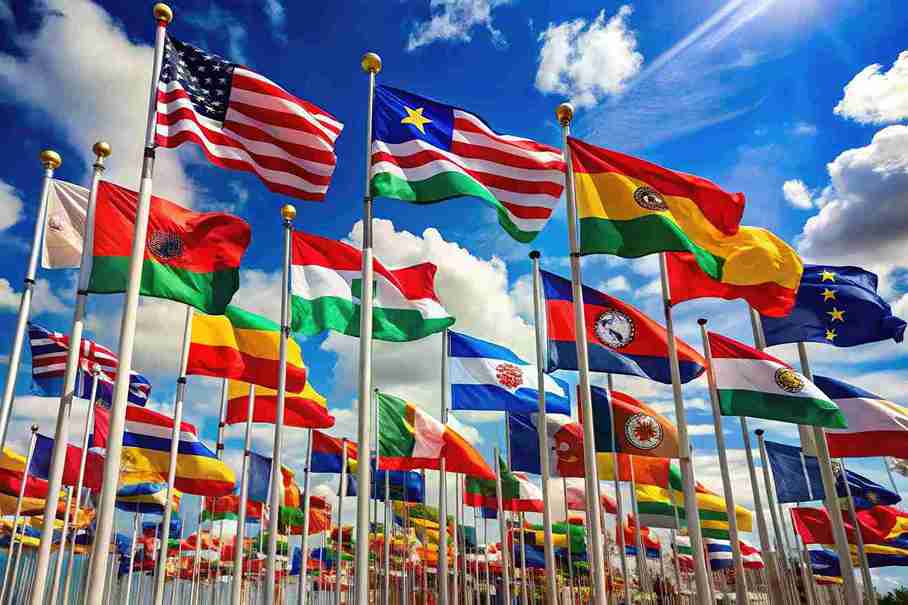
The term “globalization” refers to the connectedness between people and organizations across borders. In a globalized world, companies can trade with one another, make international business deals, hire talent abroad, and collaborate from opposite ends of the globe.
Opportunities for learning and professional growth extend beyond local environments, opening doors that were once unreachable. Companies gain access not only to diverse raw materials and products but also to larger talent pools and specialized expertise from around the world. In the end, globalization fosters innovation, progress, economic growth, and cultural understanding.
Key drivers of globalization
Global interconnectedness doesn’t happen by chance—it’s driven by several forces that make cross-border collaboration possible.
Here are five essential factors shaping globalization today.
- Technology: Technology, like the internet, allows people to communicate fluidly across borders and time zones—live and asynchronously. Modern tech tools make it easy to manage projects, share documents, transfer funds, and track performance entirely online, replacing many processes that once required manual work and in-person coordination.
- Free trade agreements: Free trade agreements make it easier for companies in different countries to buy and sell goods to one another and move products across borders. These initiatives control tariffs and establish intellectual property protections as incentives for cross-border trade.
- Global investment flows: Money that moves across borders in the form of purchases and foreign investments sustains globalization. Foreign investment is also an outcome of globalization initiatives, like the fair trade agreements that allow products and services to move across borders.
- Demand for global products and services: Consumers around the world buy products made in other countries, supporting a more global economy. For example, a person in the US might buy a car made in Japan or clothing fabricated in Turkey.
- Sustainability initiatives: With governments around the globe taking action to protect the environment, businesses and organizations in different countries must collaborate to meet regulations and industry standards.
Together, these drivers are supporting a more connected, borderless economy.
6 challenges of globalization for modern teams
Globalization gives organizations around the world access to vast talent pools worldwide, making it easier to fill roles quickly with well-matched candidates. Still, companies must navigate the following challenges to successfully and strategically grow a global workforce.
1. Learning other labor laws and tax systems
HR and payroll departments need to remain compliant wherever they hire, and this means adhering to other countries’ tax, benefits, and employment laws. When companies source talent from multiple countries, this process quickly becomes complex, with home teams scrambling to become experts on unfamiliar labor laws and regulations.
Organizations can ensure compliance by partnering with a global employment expert, like Oyster, which handles this work on the employer’s behalf.
2. Managing payroll and benefits across borders
Companies accustomed to hiring locally may find their current payroll systems aren’t equipped to handle international payments, tax withholding, or benefits administration. Moving to a global platform like Oyster enables organizations to pay employees compliantly in more than 180 countries, simplifying cross-border payroll and benefits management.
3. Staying connected
Global teams are melting pots of different cultures, and that’s a great thing. Diversity enriches an organization, with every team member bringing unique experiences and points of view to the table. But dispersed organizations have to intentionally create opportunities for connection and collaboration, using asynchronous messaging tools, video conferencing, and shared workflow platforms. Otherwise, employees run the risk of siloing information (and themselves).
Company leaders can foster strong professional relationships by creating interactive virtual activities that encourage team members to connect and collaborate.
4. Protecting data
One of the negative effects of globalization and remote work is the higher risk of data exposure. Worldwide data protection laws help regulate how personal information is stored, shared, and transferred, and companies must ensure every team member follows these rules. All employees and contractors should understand how to handle sensitive information safely and have the right tools—like antivirus software and secure systems—to protect it.
5. Coordinating across time zones
Asynchronous messaging tools make it easier for teams to stay connected across time zones, but scheduling overlapping meeting times can still be a challenge. Teams working vastly different hours may face unproductive downtime while waiting for responses or information from colleagues who are offline.
To address this, companies can schedule overlapping hours or implement highly coordinated hand-offs: When one team finishes work, the incoming shift picks up where they left off.
6. Establishing a consistent company culture
In global workforces, teammates often never meet in person or visit the home office, making it harder to share company values and traditions. To maintain a cohesive culture, Gallup recommends training managers to serve as ambassadors of the organization’s values, helping employees embrace and embody them even from a distance.
Why is globalization important for businesses?
Hiring and managing remote teams can be complex, but the effort is well worth it. Here are several benefits of globalization that businesses can experience by expanding their workforce.
- Building a diverse workforce: By bringing together team members from different backgrounds, companies gain access to a diverse range of ideas and perspectives that drive innovation. Research shows that diverse organizations also achieve better outcomes and financial results.
- Hiring the best talent, period: International hiring allows companies to choose the most qualified candidate for a role, regardless of where they live or work.
- Access to new markets: Companies that expand into different countries—even through a representative employer of record—gain access to new consumer markets where they can sell their products and services.
- Cost efficiency: Different countries have varying costs of living, allowing employers in high-cost regions to find affordable support elsewhere. At the same time, it’s essential to benchmark salaries ethically, ensuring competitive pay, living wages, and equitable benefits for all remote workers.
- Niche skills and language expertise: Professionals from different areas of the world can offer unique skills, from specialized technical skills to native-language communication and cultural insights, helping companies reach new audiences more effectively.
By leveraging globalization, businesses can build stronger, more innovative teams, access untapped markets, and gain a competitive edge—turning the complexities of managing a global workforce into strategic advantage.
Hire confidently, anywhere, with Oyster
Team up with Oyster and expand your workforce across the world.
With Oyster, you’ll get the guidance and tools you need to hire, pay, and apply benefits in more than 180 countries. You don’t even need to establish a local entity abroad.
Discover how Oyster can simplify global hiring and start building a diverse, high-performing team today.
FAQ
Still have questions about globalization? Explore the FAQs below to learn more about this complex topic and how it impacts today’s organizations.
1. What are the key pros and cons of globalization?
Economic growth, expanded access to products and services, and diverse interaction are all benefits of globalization. Drawbacks include homogenization across cultures and expanding inequality gaps between countries with a booming upper class and those with a growing under-resourced population.
2. What are the 5 major types of globalization?
The five major types of globalization are economic, cultural, environmental, technological, and political. Each of these dimensions shapes and influences how countries, organizations, and societies interact on a global scale.
3. What are some real-life examples of globalization?
Supply chains are a great example of globalization, in which products produced in one country are then transported to another for sale and consumption. Media entertainment offers another, more intangible example: People around the world can stream the same music, movies, and TV shows, gaining insight into the cultures and stories behind them.
About Oyster
Oyster is a global employment platform designed to enable visionary HR leaders to find, engage, pay, manage, develop, and take care of a thriving distributed workforce. Oyster lets growing companies give valued international team members the experience they deserve, without the usual headaches and expense.
Oyster enables hiring anywhere in the world—with reliable, compliant payroll, and great local benefits and perks.